
What Do the Colors of Priest Stoles Mean?
- Posted by: Needle Point
- Posted inLiturgical Guides
Anyone who has attended Mass regularly has noticed it: the priest's stole isn't always the same color. Sometimes it's white, sometimes deep red, other times a quiet green or somber purple. These aren't random choices — they follow a centuries-old tradition of liturgical colors, and each one carries its own meaning tied to the season, feast, or occasion being celebrated.
Understanding these colors helps deepen appreciation for the Mass, and for those responsible for a parish's vestments, it's essential knowledge for keeping a well-rounded liturgical wardrobe.
White (or Gold)
White represents purity, joy, and glory. It's worn during the great feasts of the Church — Christmas, Easter, and celebrations honoring Christ, Mary, and saints who were not martyrs. Weddings and funerals (as a sign of resurrection hope) also commonly use white.
Gold is often used as an alternative on the most solemn occasions, carrying the same symbolic weight as white but with added festivity.
Explore our white and gold embroidered stoles crafted with traditional motifs for these high feast days.
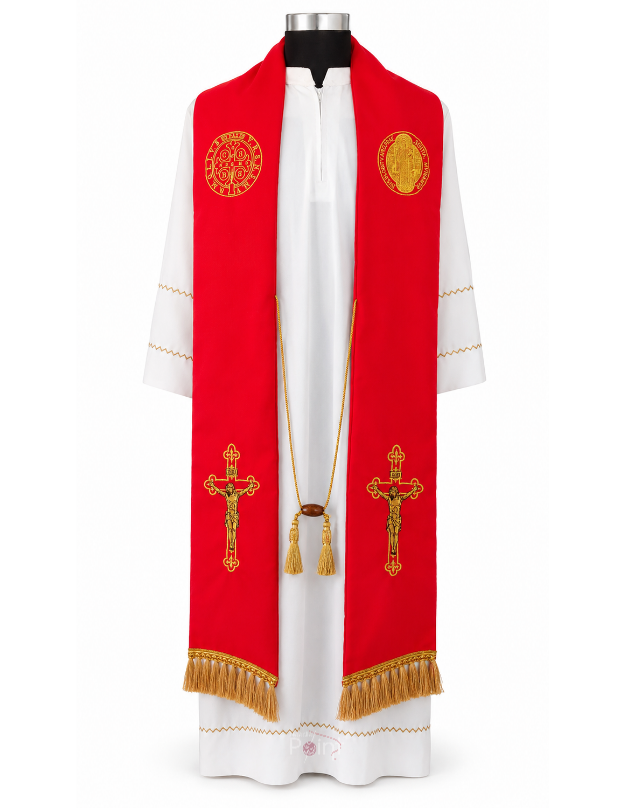
Red
Red symbolizes the blood of martyrs and the fire of the Holy Spirit. It's worn on Palm Sunday, Good Friday, Pentecost, and on feast days honoring martyrs and apostles.
Because red is used across such significant occasions, it's often one of the first color vestments a parish invests in beyond the basics.
Green
Green represents hope and growth, and it's the color seen most often throughout the liturgical year — worn during Ordinary Time, the long stretches between the major seasons.
Because green is used so frequently, having well-made, durable embroidered stoles in this color is especially practical for everyday parish life.
Purple (Violet)
Purple signifies penance, preparation, and reflection. It's worn during Advent and Lent — the two great seasons of spiritual preparation before Christmas and Easter.
Rose
Rose is a rare and special color, worn only twice a year: on Gaudete Sunday (the third Sunday of Advent) and Laetare Sunday (the fourth Sunday of Lent). It marks a brief moment of joy within otherwise penitential seasons.
Black
Black, though less common today, is traditionally used for funeral Masses and All Souls' Day, symbolizing mourning and solemnity.
Why the Right Vestments Matter
Each of these colors plays a role in helping the congregation connect visually with the rhythm of the Church calendar. For churches and clergy building out a complete set of vestments, having well-embroidered stoles in each liturgical color ensures readiness for every season and celebration.
At Needle Point, we craft clergy stoles and chasubles using computerized embroidery, with traditional motifs like crosses, wheat and grapevine, and IHS/JHS monograms — designed to honor the symbolism behind each liturgical season.
Have questions about building out a complete set of vestments for your parish or seminary? Contact us — we're happy to help.